

June 23, 2026
Democratised data, the Australian Government’s 2024 Multicultural Framework Review (MFR) and social cohesion may seem like separate entities. They are not.
The daily news confronts me with the reality that social cohesion across the world is breaking down as humans are pitted against each other. As I’ve discussed elsewhere, most conflict is based on perceived cultural differences and the cost of this is astronomical – while the cost of identity-based exclusion of people is even higher. These costs amount respectively to 14% and by my estimation at least 26% of annual global GDP.
Societies are vulnerable to conflicts that can quickly spiral into catastrophic scenarios. The most antifragile societies are those with well-managed diversity. As one of the world’s most culturally diverse nations, Australia has more to gain or lose from its diversity than most. At best, we are a multicultural society where innovation thrives and mutual curiosity and respect is the norm. At worst, we are fearful, insular, judgmental of each other and torn by internal conflict. The stakes could not be much higher.
The MFR was initiated in recognition of this: on 2 June 2023 Andrew Giles, the minister leading the review, delivered a brilliant and honest launch speech, saying ‘Well-managed diversity leads to social cohesion.’
Each of the 796 submissions that I read to the MFR, some of which I quote below, were constructive and insightful. Unfortunately, time constraints prevented me from reading most. I hope someone writes up this collective wisdom in an accessible form to share and to acknowledge everyone who contributed their hard-won knowledge for no recognition or reward beyond contributing to the strength and sustainability of the Multicultural Framework.
I acknowledge the nonjudgmental bounty and hospitality of the lands (including sky and waters) that enable all our endeavours, including faraway lands.
In Congolese-Australian Future D Fidel’s play La Belle Epoque, Congolese refugee Chris points out that most of us carry his country in our pockets. Most of us also walk on the rubber from parts of Southeast Asia and Africa, and so on.
Foundations
Frameworks need good foundations. The foundations I propose for the Multicultural Framework are: democratised data; the greater embedding of intercultural competency in schools as a core skill; Indigenous co-design and co-implementation.
Democratised Data
I have devoted more than thirty years of my professional life to the question of social cohesion. My team created the diversity data analytics tool, the Atlas, with a vision for ‘democratised data’ – meaning data where human attributes such as religions, countries of birth, ethnicities, cultures, and languages are accorded equal weight so the resulting information is unskewed by the usual selective datasets that inform our polities and leaders.
Author Richard Powers said, ‘Life [since globalisation] is simply too complex and interdependent for us to wrap our heads around without the help of our machine prosthetics.’ It turns out the Atlas, with its democratised datasets, brings great clarity to the questions of social cohesion and the skilful management of cultural diversity.
We cannot afford to leave technological advancement in the hands of a few people based in Silicon Valley or a few other technology hubs dotted around the world. We cannot let this happen unchecked or they will shape our virtual world, which is increasingly indistinguishable from our real world, in their image. The only safe technology is holistic.
Intercultural Competency in Schools
Just as democratised datasets are the best foundation for informed policy-making, education of children is the sturdiest foundation for the socialisation required to integrate the knowledge, insight and wisdom – the intercultural understanding and capability – acquired through data and experience. Intercultural dialogue is rightly embedded as a core competency with the Australian curriculum alongside numeracy, literacy, critical and creative thinking, information and communication technology capability, personal and social capability, and ethical understanding. However, more work remains to be done in translating this into effective pedagogy.
Indigenous Co-Design and Co-Implementation
Australia formally endorsed the United Nations Declaration on the Rights of Indigenous People, and is subject to international expectations that we will follow its principles, including Article 8: ‘Indigenous peoples and individuals have the right not to be subjected to forced assimilation or destruction of their culture.’ This gives Indigenous cultures in Australia a special status, which must inform any multicultural framework. (My Greek heritage does not have this protection from potential policies of assimilation in Australia.)
Without substantial leadership from the Indigenous sector in co-designing and co-implementing the multicultural framework, the MFR is incomplete and weak. Indigenous people and people groups have unique rights, assets and challenges that needed to be clearly acknowledged and addressed within the framework review.
Aboriginal and Torres Strait Islander Social Justice Commissioner June Oscar was given the MFR’s ‘First Word’ (p9), which she used to advocate elegantly for a multicultural framework modelled on the Indigenous kinship system, a suggestion that was not overtly, if at all, taken up in the MFR. It is unclear how many Aboriginal and Torres Strait Islander people and groups were invited to contribute to the MFR but for the remainder of the Review their voices are mostly evident through their absence.
The MFR process coincided with the referendum process to establish an Aboriginal and Torres Strait Islander Voice to Parliament (the Voice), announced on 23 March 2023 and voted down on 14 October 2023. The referendum results, especially the high ‘yes’ vote from remote Aboriginal communities, showed a willingness to work with government.
The negative referendum outcome created a policy vacuum that the MFR does not seem to have filled, despite the clear need for this focus in the terms of reference into the MFR, which emphasised the importance of consulting and reflecting on the experiences of Aboriginal and Torres Strait Islander people in a multicultural Australia (MFR p139).
Despite the claim in the MFR’s introduction that the Panel engaged with a range of First Nations organisations, only two Indigenous-led organisations are listed in Appendix E: Consultation (MFR p173ff): Southern Aboriginal Corporation, which serves the Noongar community, and Lhere Artepe, which represents the Native Title Holders of Alice Springs. If these were the only Indigenous-led organisations consulted, it is clearly insufficient.
Was the MFR process a missed chance to co-design the new multicultural framework with Aboriginal and Torres Strait Islander people and people groups and to establish mechanisms to co-implement the framework? I also did not find any Indigenous-authored submissions among the 796 submissions to the Review Panel, which raises more questions.
Co-design and co-implementation of the Multicultural Framework is necessary with the full range of Aboriginal and Torres Strait Islander cultural groups. This is not an impossible task. For instance, there exists the Coalition of Peaks, which was formed to partner with governments and represents more than 80 Indigenous-led peak organisations that themselves represent about 800 organisations.
Multiculturalism, Australia and Democracy
Multiculturalism is a policy that is subject to different settings. The main purpose of the MFR as I understand it is not to advance multiculturalism but to help governments in their endeavours to manage cultural diversity.
Noel Pearson described Australia as a three-part nation, created from ‘our ancient heritage, our British inheritance and our multicultural triumph’.
This pragmatic definition of Australia is useful in considering Australia’s internal and external orientations. Australia’s British inheritance advantages Australians in a globalised world. For instance, the English language is the world’s dominant lingua franca and no one seriously suggests Australia should exchange this for any other as its de facto official language.
As participants in democracy, Australians collectively elect the leaders they believe most closely represent their values and aspirations. The elected leaders determine the multicultural settings.
It may help to imagine these settings as the temperature gauge on an oven, and the Australian populace as the cake that is being baked. A question Australians are asked at every election, overtly or not, is what setting do we collectively want? From an array of visions, Australians select one.
Pauline Hanson’s One Nation party favours a very low multicultural setting that reinforces Australia’s British inheritance, as articulated in its policy on immigration:
‘One Nation will extend its zero-net migration policy and focus on permitting only highly skilled migrants from culturally cohesive countries into Australia. Migrants must demonstrate a sound level of English for assimilation purposes.’
Australia’s currently elected prime minister favours a higher setting, emphasising that multiculturalism is ‘one of Australia’s greatest strengths’.
Now imagine if your oven is not the same temperature throughout and bakes the cake very unevenly.
In initiating the MFR, the democratically elected Australian government sought to understand how best to control the multicultural setting so that it will reliably reflect the will of the people.
The Multicultural Framework Review
On 24 July 2024, the Australian government released the 202-page MFR, ‘Towards Fairness – a multicultural Australia for all’ as a ‘generational reform agenda’ ‘that will position Australia to realise its full potential as a nation made up of many cultures, faiths and lived experiences.’ (MFR p10).
The MFR was quickly, warmly and thoughtfully welcomed by a range of organisations, including AMES, the Australian Human Rights Commission, the Community Broadcasting Association of Australia, ECCV, FECCA, Independent Multicultural Media Australia (IMMA), Multicultural Youth Advocacy Network Australia, Professionals Australia, the Refugee Council of Australia and SSI (with apologies for any I’ve missed).
Among these overwhelmingly positive responses, the main concern raised was that the report may not be acted upon. Several added their appreciation for the government announcement of a $100 million investment to implement the recommendations.
The release of the MFR was accompanied by a concise summary and roadmap from the Department of Home Affairs. According to this, the implementation of the MFR recommendations will be ‘underpinned by adequate data’. This was an important statement because the roadmap embedded in the MFR itself failed to mention data, seeming to ignore its fundamental role. However, I immediately wondered how the Department of Home Affairs defines ‘adequate data’ because the way these two words are acted upon will have a determining impact in the success or failure of the Framework.
Adequate Data
How do you ‘position Australia to realise its full potential as a nation made up of many cultures, faiths and lived experiences’ without a clear inventory of those cultures, faiths and lived experiences?
Over and again among the 796 submissions to the Review Panel, people made this point in their own way, e.g. in this submission from the African Women Community Support Group (AWCSG) Inc: ‘Africa is a continent of 54 countries, each with its own multiplicity of ethnic groups and languages, so any group seeking to represent “Africa/Africans” is bound to be limited in its reach.’ The Ethnic Communities Council of Western Australia wrote, ‘The principles of “diversity within diversity” and “intersectionality” should form the crux of the review process and outcomes.’
Unfortunately, few people have a concept of democratised data and therefore don’t realise it is possible to take a full inventory.
Most people in leadership positions today, despite a volume of calls from people who feel ‘invisibilised’ in the data, act on the belief that a database with fewer than 500 categories will produce ‘adequate data’ on human diversity.
Cultural Infusion’s Atlas’ democratised database, our proprietorial Global Database of Humanity, contains 43,000+ operationalised categories.
This is the achievable standard for ‘adequate data’.
Defining ‘Multicultural’
Cultural Infusion submitted a response to the Review Panel at the end of September with just 11 recommendations. As with many of the submissions, our first two recommendations pointed to the need for a clear, inclusive definition of ‘multicultural’ and a need to acknowledge strengths and unresolved issues of diverse Aboriginal and Torres Strait Islander communities. (We pointed to the Victorian Government report on multicultural affairs 2021–2022 as a good model for this.)
The Australian Muslim Women’s Centre for Human Rights’ submission underscored the need for a clear definition of ‘multicultural’, writing, ‘Multiculturalism must be reflective of an all-inclusive understanding of diversity that positions white cultures within the collective understanding of multiculturalism rather than its use exclusively for non-white cultures.’
The MFR states (p28), ‘The concept of multiculturalism and the terms that shape our understanding of it has [sic] evolved, reflecting changes in the country’s demographic composition and aspirations. So it is necessary to revisit some terms and labels to accurately understand and define multiculturalism in today’s society, encompassing different senses of belonging and identities as they emerge.’ The MFR promises to clarify the terms ‘multiculturalism’ and ‘culturally and linguistically diverse’.
After referencing and providing an ‘explainer’ (fig. 1) for the National Agenda for a Multicultural Australia (Agenda) of 1989, the MFR states (p 29) that ‘the Agenda’s definition of multiculturalism provides the best guide for understanding the term’ and that the Review Panel ‘adopted the definition for this Report’.
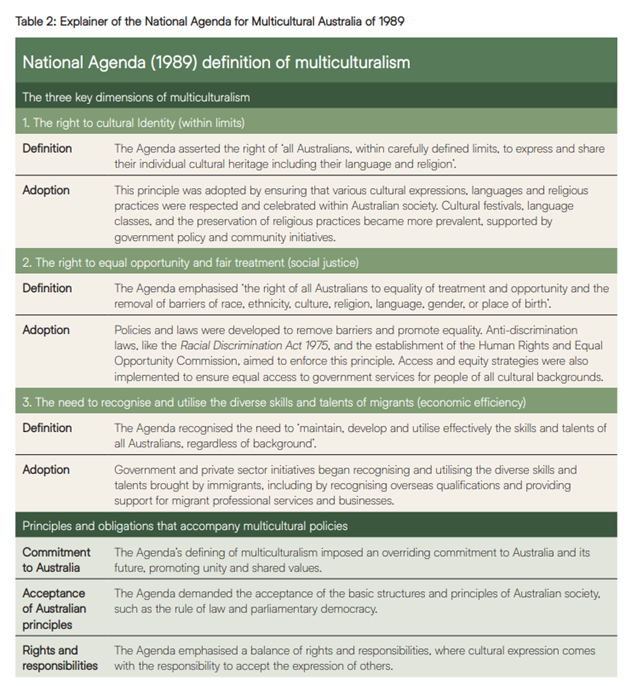
Fig. 1 I find this ‘explainer’ from p28 of the MFR hard to understand.
The 2-page Agenda that the explainer set itself the task to explain is in fact a beacon of clarity, containing the following statements:
- …multicultural is simply a term which describes the cultural and ethnic diversity of contemporary Australia. We are, and will remain, a multicultural society.
- [The] dimensions of multiculturalism…apply equally to all Australians, whether Aboriginal, Anglo-Celtic or non-English speaking background; and whether they were born in Australia or overseas.
Unfortunately, this definition of multiculturalism was not represented as such in the ‘explainer’ or elsewhere in the MFR and the term ‘multicultural’ was unevenly applied, often inferring that multicultural people are a distinct subset of Australians, as in the terms ‘multicultural stakeholders’ (p 13) and the ‘multicultural sector’ (MFR pp12, 62, 111). The use of the term in this way sets apart segments of the population as non-multicultural.
This is not how we bring everyone along or create a ‘multicultural Australia for all’.
It is paramount to the success of the MFR that every Australian understands that their cultural attributes, whatever they may be, are a part of – and not apart from – multicultural Australia.’
The problem stems from a colloquial understanding of the word ‘multicultural’, which excludes Anglo and Indigenous people. African Alliance NSW in their submission sensibly suggested that we simply use the term ‘diverse’ instead of ‘multicultural’. Their first recommendation was for ‘an inclusive terminology that describes the cultural diversity of the Australian population’. At Cultural Infusion, we understand ‘multicultural’ as a term describing the ethno-linguistic-religious attributes of diverse communities.
Imprecise definitions and understanding of multiculturalism permeate all levels of government in Australia. The Victorian State Government’s recent Multicultural Policy Statement, for example, doesn’t attempt a definition and refers to ‘multicultural communities’ as though there are non-multicultural communities.
Our collective cultural diversity now has an added layer of complexity in the form of Artificial Intelligence (AI), which must be considered part of our cultural diversity, therefore it is increasingly imperative that we are clear in our use of these concepts and words.
Defining Cultural Diversity
The MFR’s impactful cover artwork titled ‘Everyone is different’ under the theme ‘Australia looks like this to me’ by child artist ‘Miliana’ perfectly captures the complexity of cultural diversity. If only everyone had Miliana’s level of understanding.
Culture shapes individual identity, behaviour, social norms, values, belief systems and interactions with others and the world. It is therefore problematic that cultural diversity is often misunderstood and undervalued by organisations and societies.
The MFR was right to link the terms ‘multicultural’ and ‘culturally and linguistically diverse’ (or more plainly, ‘cultural diversity’). It is impossible to gain a clear understanding of multiculturalism without a clear definition of cultural diversity.
CALD
The MFR highlighted issues with usage of the term ‘culturally and linguistically diverse’ (CALD), which was ‘raised by many stakeholders’ (MFR p30), and is a topic I’ve extensively written about. The MFR then took a step back from the issue, concluding that though ‘words are how we invent meaning’, ‘language is complicated and messy … and we’ll never find the perfect [term]’ (MFR p31), quoting American expert on legal education, racial representation and diversity, equity and inclusion, Dr Meera Deo.
With democratised data, it is easy to ‘find the perfect term’ for culturally diverse people. The perfect term is the way people want to identify themselves. This requires inclusive datasets that give the visibility to the important attributes of cultural identity.
How many times do we need to hear from peoples as diverse as Warlpiri, Wurundjeri and Tiwi that they do not want their important cultural identities to disappear within the homogenising category ‘Aboriginal’ or ‘Indigenous Australian’? As ABC News reported, ‘The Australian census is meant to provide a detailed snapshot of the nation, but some ethnic communities in Australia are worried they will not be counted.’ The ABC report quoted Kachin woman Mi Kai Lagwi, who said after being classified as ‘Mainland Southeast Asian’, ‘it just makes me feel like we are disappeared’.
In the words of the Australian Muslim Women’s Centre for Human Rights submission, ‘We should always be specific when describing the specific community we’re referring to. We must resist overly used words/terms that are for the convenience of others – government, sector, people without lived experience of the challenges and systemic barriers people from non-dominant cultures face. This level of specificity allows for the tailoring of support services to meaningfully meet the needs of these cohorts.’ The African Australian Advocacy Centre referred to a ‘concerning pattern of overgeneralisation’ leading to an insufficiency of culturally appropriate mental health services.
The term ‘CALD’ is mainly used by policymakers to consider the needs of people from non-Anglo backgrounds, when what is often being considered is people’s distance from the hegemony due to specific attributes.
A Universal Understanding of Cultural Diversity
A defining moment in my life happened some years ago when Cultural Infusion Chief Technology Officer Rezza Moieni said, ‘Peter, you talk a lot about diversity and cultural diversity, and these are beautiful words but what do they mean? How do you measure diversity?’ A lightbulb moment.
These questions set our team on a research journey that was intended to take 6 months but consumed more than 5 years and led to the creation of the Atlas, which is now the world’s most effective and only holistic diversity data tool, endorsed in top US political publication The Hill by leading race theorist Dr Sheena Mason and adopted and embraced by organisations from small to massive, including the world’s largest cloud service provider Amazon Web Services (AWS).
It is, no doubt, a huge breakthrough that through the Atlas survey people from any background in the world can precisely identify their attributes. AWS Global Head of Inclusion, Diversity & Equity La Davia S. Drane told the 2023 re:Invent audience in Las Vegas that ‘The feedback from our employees has been that it was just an inclusive exercise, just asking them to take the survey… just having the opportunity to answer those questions like that took it farther than just being a check the box that you are “other” but really trying to understand them and who they are.’
Our finding during the extensive literature review phase of our research was that the concept ‘cultural diversity’ had not been adequately understood or defined.
Our first task was to define this term. Defining ‘diversity’ is pretty easy – it basically just means ‘difference’. An individual cannot be described as ‘diverse’ except in relation to other individuals.
Defining cultural diversity proved an extremely complex task.
After two years working with a team of anthropologists, linguists, sociologists and other experts, we disaggregated cultural diversity into four key pillars, each with subsets. These are: country of birth (including ancestors’ country of birth), language, worldview (secular and non-secular) and ancestral heritage and culture/s one may identify with. These intersect with a range of other attributes, experiences and dimensions, including the important consideration of how representative an organisation is of the community it serves.
Our goal was to create a universal understanding of cultural diversity, one that leaves nobody out. The Forcibly Displaced People Network’s submission underlines this need by urging specific inclusion and recognition of LGBTIQ+ people in the Multicultural Framework as do many other submissions, such as this recommendation from the National Ethnic Disability Alliance:
‘NEDA recommends that the Multicultural Framework Review is holistic, cross-government, and human rights-based at its core. We recommend that the principles of intersectionality be applied throughout the Review so that our shared aspirations for an inclusive and equitable multicultural society are fully realised.’
And this from Engage Pasefika’s submission, ‘We are asking for a multicultural framework that is intersectional.’
Towards Fairness
My heart sank when I read the title of the MFR, ‘Towards Fairness’. My first reaction was in part to the word itself. I wrote on LinkedIn,
Language defines the reality we live in. While I’ve only had a quick squiz at the contents, I am underwhelmed by the title of this report, which sets a tone for the rest. Is this title, ‘TOWARDS FAIRNESS: A MULTICULTURAL AUSTRALIA FOR ALL’ the best we can expect for a multicultural policy for Australia? What about:
A MORE VIBRANT AUSTRALIA
A MORE SOPHISTICATED AUSTRALIA
… ‘fairer’ is not only a weak rallying call but also problematic – the root word ‘fair’ is ambiguous and for many people conjures racist legacies such as the White Australia Policy (notwithstanding its prominence in the National Anthem). Words matter.
In our submission to the MFR, we urged a nuanced approach to multiculturalism.
The Atlas is sometimes situated in the field most commonly known as Diversity, Equity and Inclusion (DEI). If you don’t know much about this field, just do an internet search on ‘DEI fraught’ or ‘DEI backlash’ and you will find plenty of articles detailing the resistance that DEI has been met with. As our peer in the DEI field Amri B. Johnson writes, ‘All organizations should be working toward inclusion and equity. It’s just that companies need to do it in a way that doesn’t spend a lot of social capital making any group “wrong” — because that makes them the new “othered” group.’
The concept of fairness can conjure a perpetrator/victim binary that harms our social fabric. How attainable is justice when life itself seems to be so often unjust and while our histories are so ‘entwined’, as June Oscar phrased it in her ‘First Word’?
That said, many Indigenous people, migrants and asylum seekers have had a rough deal in Australia, some more than others. For the latter two groups, I refer readers to Tim Watts’ 2019 book The Golden Country: Australia’s Changing Identity and Behrouz Boochani’s 2018 book No Friend But the Mountains respectively.
In short, justice does have a place in multicultural policy, so one of our 11 recommendations to the MFR was to establish a truth and reconciliation process:
Establish a truth and reconciliation process with an understanding that our systems were often not designed for the inclusion of underrepresented groups and that truth and reconciliation may have far-reaching implications […] Simple redress of symptoms is not enough to fix the problems caused by lack of diversity in public institutions.
The MFR did not take up this recommendation and none of their 29 recommendations offers a similarly comprehensive approach to justice. It is not enough to intend justice and a piecemeal attempt at redress can cause unintended harms.
Even a truth and reconciliation process could be too limited for Australia’s deep, rich and vast cultural diversity.
There Are No Shortcuts
There are no shortcuts when it comes to diversity, equity and inclusion (DEI) endeavours, because human groups are naturally diverse, people’s identities are complex, individuals resist stereotypes, and no two identities are the same. The only ‘shortcut’ is to use a tool like the Atlas that has done all the hard work of researching and collating records one by one – the catch being that there is no comparable tool.
In the Introduction to the Review, the authors of the MFR write, ‘Throughout the six-month review period, we discovered a lasting truth: Australian communities are the driving force behind the success and resilience of multiculturalism.’
This did not just ‘come about’ (and I’m not suggesting that the MFR implies that it did). The organisation I founded, Cultural Infusion, has with our brilliant and dedicated presenters and staff delivered cultural incursions and programs to more than 7 million students since 2002.
The people who as a whole have undoubtedly worked hardest to foster harmony in Australia are educators from Aboriginal and Torres Strait Islander backgrounds. As Boori Monty Pryor wrote in his classic 1998 book Maybe Tomorrow (p 41),
There is truth in the saying that the things that scare you the most are the things you don’t know much about. This was with a group of kindergarten kids, kinders, to Grade 2s in a very culturally diverse school. At the end of the show, this little one, his name was Abdul, he jumped up and came running out…I knelt down and said, ‘Yes, mate?’ And he looked at me and said, ‘You know…you know…um…um…’ He was trying to get it out in a hurry […] ‘You know what…um…um…before, you know, I used to be really scared of Aboriginal people. And…um…I remember…when I used to see Aborigines on TV I used to pull the sheet up and hide underneath and …um…I used to be really frightened.’
After all this, he just looked up into my face and said, ‘But I’m not scared anymore.’
Still to this day, Cultural Infusion receives similar feedback from educators and presenters on a weekly basis, showing how this work affects hearts and minds. The impact our intercultural education programs have had on students, their families and communities over the last 22 years has often been transformational.
Recommendation 20 of the MFR addresses education: ‘The Department of Employment and Workplace Relations revise the Australian Curriculum Literacy and Numeracy Continuum and L&N Vocational Education competencies to promote and advance cultural literacies. The Department of Education to adjust assessment instruments such as NAPLAN to reflect this priority.’
This recommendation is a start, but needed to be elevated to one of the top priorities of the Framework as foundational to the work of social cohesion, accompanied by a call to invest and draw on the expertise needed to guide and drive desired outcomes in schools.
Social cohesion is work of painstaking care with an eye to sustainable outcomes. It requires sophistication, nuance and immense patience. Australia’s owes its relative cohesiveness to many cultural workers, including artists and educators on the ground, in communities and in schools.
Languages
A valuable recommendation of the MFR is Recommendation 12: ‘Leverage Australia’s diversity of languages to support our economic prosperity through a revitalised language policy led by the Australian Government.’Recommendations 13, 14 and 15 refer to language services and Recommendation 19 is ‘to increase investment for programs to support language acquisition courses at all learning levels’.
In our submission to the MFR, we touched on the need for a greater focus on languages and how this would be of general benefit. As we wrote,
[S]tudies have shown that Australian children from a language background other than English received ‘markedly higher marks in reading, writing and spelling’ in most parts of Australia. University of New England (UNE) languages and literacy education expert Professor Anne-Marie Morgan has said, ‘Australia is playing catch-up with the rest of the world’s population, which is largely plurilingual. We disadvantage our young people by not preparing them for the world they engage with, and in providing them with the many benefits learning an additional language brings.’
There are pressing reasons to embrace Recommendation 12 of the MFR, especially after the failure of the Voice referendum. The Australian Government’s 2020 National Indigenous Languages Report (NILR) revealed that ‘all of Australia’s Aboriginal and Torres Strait Islander languages are under threat,’ and most are ‘highly endangered’.
In emphasising that there is no ‘room for complacency’, this report identified the ‘strong need for more extensive and consistent data on the state of Aboriginal and Torres Strait Islander languages.’ It reported that ‘Existing data collection methods do not, in most cases, recognise the complexity of language contexts in Australia or reflect the experience of Aboriginal and Torres Strait Islander people.’ (NILR p10)
In brief, the NILR stresses the responsibility of Australians to reverse the decline of these languages ‘as our legacy for future generations’ (p7) and in recognition of the ‘cultural, social and economic benefits to individuals, communities and the nation’ (p8) as well as the fact that they are ‘an important part of Australia’s cultural identity, and form part of the diversity of cultures that make up Australia as a whole’ and are ‘fundamental to Australia’s uniqueness’. (NILR p13)
The MFR describes language as ‘the primary instrument of culture’ (p44). Cultural Infusion’s Atlas does not conceptualise language as ‘the primary instrument’ but as just one of the four main aspects of cultural diversity alongside country of birth (including that of parents and grandparents), worldview (secular and non-secular) and ethnicity/ancestral heritage and culture/s one may identify with. Languages Professionals Australia accurately describe languages as ‘only one of many areas of multicultural policy’ in their response to the MFR.
However, dedicated attention to languages could help strengthen all four aspects, and I embrace the call for a ‘revitalised language policy’ in Recommendations 12 and 19 as well as the recommendations to improve the quality and ensure the sustainability of language services.
A More Representative Australian Public Service
Recommendation 17, ‘Promote national diversity and inclusion standards in the Australian Public Service (APS) and for government-funded organisations and public institutions’ is of high importance and deserved greater prominence in the MFR. This recommendation would be strengthened by legislating ‘Cultural Diversity Composition Reporting’ in line with the Workplace Gender Equality Act 2012, as recommended by us in our submission, echoing Jieh-Yung Lo’s call in the Mandarin.
In the words of the Community and Public Sector Union, ‘Unless the decision-makers in the APS who influence policies, programs and service delivery genuinely reflect Australia’s cultural diversity at all levels, it will be difficult to properly deliver an effective multicultural agenda.’
When organisations closely reflect the cultural composition of the communities they serve this minimises biases and resentments, which enhances social cohesion. A substantially more representative public service would lead to many other improvements to Australia’s multicultural health, which would directly feed into Australia’s productivity, wellbeing and social coherence.
Conclusion
I support all the recommendations in the MFR if – this is a big if that the MFR hedges – the recommendations are implemented equitably (holistically, intersectionally), which for many of them requires access to democratised data – we must all become data literate enough to grasp this point – and if intercultural competency in schools is integrated into the foundations of the framework and if Indigenous cultural needs are successfully integrated within the framework.
Democratised data, childhood education and Indigenous co-design and co-implementation must be the sturdy foundations for any multicultural framework.
United we stand, divided we fall, diversified we grow.
This response to Australia’s 2024 Multicultural Framework Review was first published in 2024 and has since been lightly edited.
About the author:
Share this Post