

December 15, 2025
Sharing Culture
Each cultural tradition – a Kenyan dance or Japanese calligraphy – is an expression of a knowledge-based system and a myriad of ideas that have come together to form that tradition.
A human is more than just an individual human being. Humans reflect every person they’ve ever met and every experience they’ve ever had. Every human is also a live transmitter of information that pre-existed their birth.
What Is Culture?
Cultural theorist Raymond Williams described culture as ‘one of the two or three most complicated words in the English language.’ Another great cultural theorist and dear friend, D. Paul Schafer, has worked through this question extensively and powerfully argues that our future relies on a great cultural awakening, since culture is fundamental to who we are.
Our own core definition of culture in the context of cultural diversity is as follows:
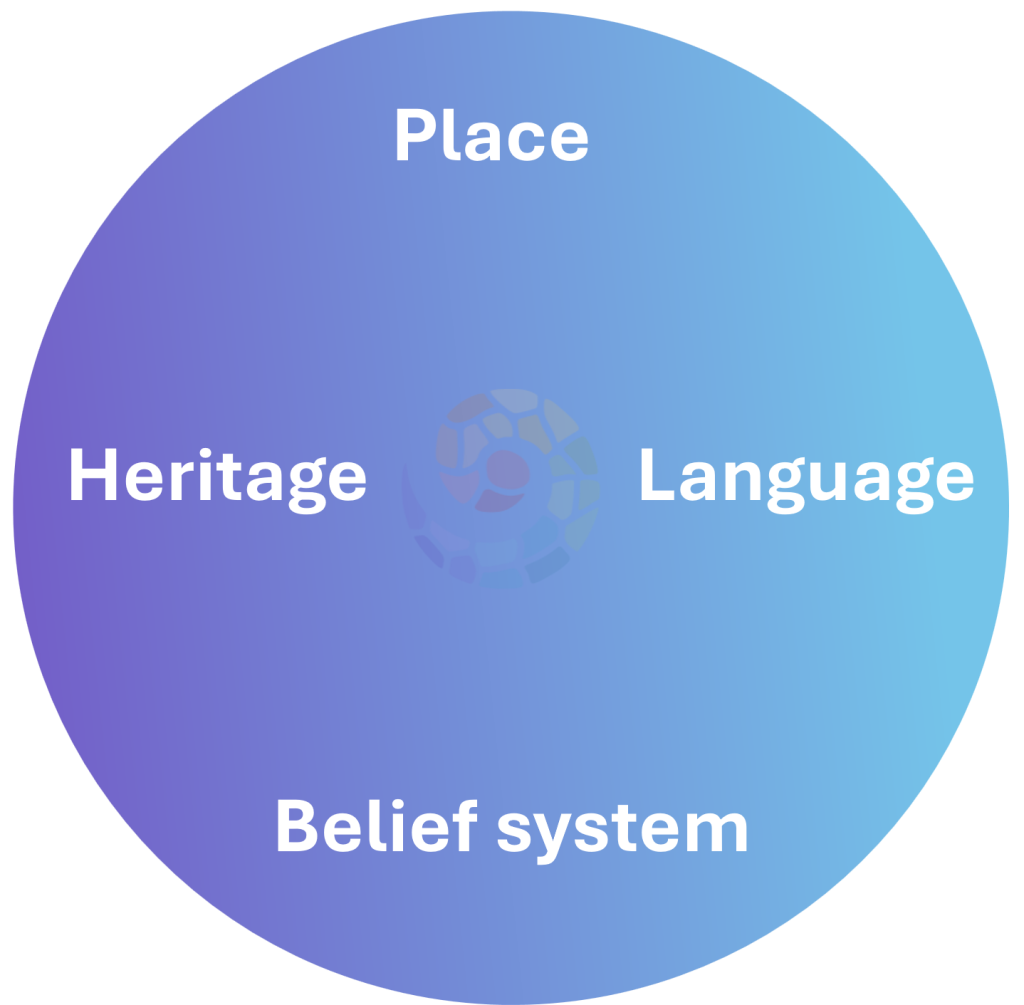
Culture is the complex of learned distinctive, spiritual, material, intellectual and emotional features that characterise a society or social group, transmitted through and shaped by and in dynamic, reciprocal relationship with place; language; belief system; and heritage.
The accompanying diagram also illustrates our cultural identity. Think about it! What has shaped your cultural identity?
Cultural Presentations and Performances
Cultural Infusion’s hundreds of presenters share cultural traditions in highly interactive and accessible ways. These are some of the most highly specialised, skilled and dedicated artists you could ever meet. They keep cultural knowledge alive through sharing it – and they transmit some of that knowledge to everyone they share it with. This is a privilege of engaging with ancestral knowledge that we all get to experience.
One of our presenters, Bonnie, came by the office last week to demonstrate her work: Chinese fan dance, ribbon dance, lantern dance, and Chinese Korean ethnic dance. Bonnie has worked with Cultural Infusion for almost 2 decades and is a wealth of knowledge on each of these dances and the history behind them, including the history of Korean migration to China. The main differences between Chinese and Korean fan dance, she told us, is that Chinese fan dance has much greater wrist and finger movement, while Korean fan dance focuses on the breath:
We receive the main transmission when she actually performs these dances:
The level of training that goes into being able to perform these dances in such a small space with minimal preparation is evident.
A multicultural festival is a nexus for public education, scholarship and advocacy, and a great instigator of new ideas. It is also an important opportunity for communities to come together in person and consider who we all are in relation to each other and the place we share. It is also a forum to showcase and support the talent in our communities.
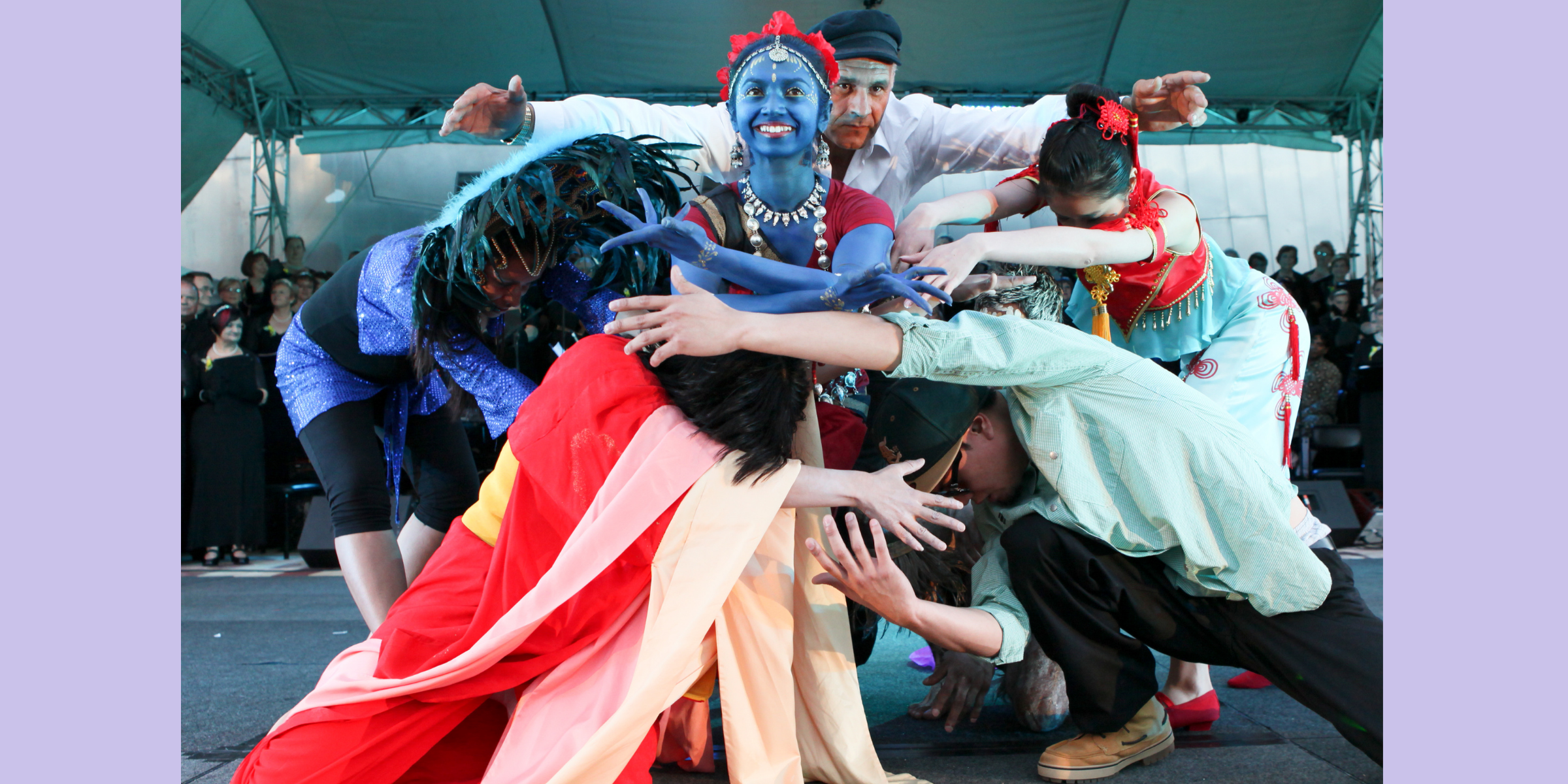
Maybe you already recognised Bonnie from the banner image of this post, which comes from one of the nine Australia Day concerts I produced for the Victorian Government:
If you watch the entire clip, you will hear dear friend and Victoria’s most senior Wurundjeri Elder Joy Murphy say these profound words,
‘You and I need to work together to maintain what we’ve got.’
These words sink my heart in the wake of the tragic incident that unfolded on Sunday 14 December, the first day of Chanukah, at Bondi Beach. Joy, aware of the destructive forces of homogenisation and assimilation, was taking the broad view, understanding that these forces target all cultural traditions, and that cultural traditions are precious expressions of humanity.
Over the last three decades, I owe a lot to Joy’s generous, inclusive leadership.
Treaty
Last Tuesday, 9 December 2025, was a historic day in the Parliament of Victoria, as it marked the State Apology to the First Peoples of Victoria, following the signing of the Statewide Treaty on 13 November – Australia’s first ever treaty with Aboriginal people. I want to draw attention to the statements on culture:
- For the laws, the policies and the decisions of this Parliament and those that came before it — laws that took land, removed children, broke families, and tried to erase culture — we say sorry.
- For the laws that criminalised culture and punished survival — we say sorry.
- For the silencing of language, and the erasure of words that carried knowledge older than the State itself — we say sorry. The loss of those languages is a loss for us all, for they held truths about this ancient land that we may now never fully understand.
- For the forced removal of families to missions and reserves, where culture was controlled, movement restricted and identity denied — we say sorry.
The treaty and this apology, which included a commitment to ‘healing and change’, are testament to the vital importance and important vitality of culture.
Overpriced Souvlakis?
The World Day for Cultural Diversity for Dialogue and Development falls on 21 May. I spoke this year alongside Lynda Ford, Janet Lui and Erfan Daliri at an intercultural dialogue hosted by Farhat Firdous from the Department of Employment and Workplace Relations. I came along hoping to emphasise the importance of a holistic data-driven approach to the work of embracing cultural diversity and show that these initiatives can be done methodically, systematically and holistically, in a way that allows everyone to feel acknowledged in processes and reassures the community that no identity attribute is blocking their way to a seat at the decision-making table.
Lynda and Erfan, however, chose to target cultural festivals.
‘What happens,’ asked Lynda, ‘when people finish on stage? Do they hop off and maybe buy an overpriced souvlaki, watch another cultural group perform and then leave? If you’re like myself you might ask yourself, What’s been the value of that today to Australian society? What part of the cost, effort, activity has actually led to a more harmonious, inclusive and cohesive Australia at the local, state or federal level?’
Erfan later added, ‘We can celebrate cultural diversity and we can have as many overpriced souvlakis, as Linda was mentioning, as we like, but until we acknowledge that with culture comes power and with power comes exclusion we can’t effectively talk about inclusion by any stretch of the imagination.’
It was hard for me to understand the point these two were making. What price do they think is fair for a souvlaki? Why were they targeting my culture? What sort of Return on Investment evidence was Lynda looking for that can’t be seen in the delight of a crowd at one of these gatherings? What sort of conversation does Erfan want about culture and power before we can effectively talk about inclusion, and how much culture do we have to lose before his standards for discourse are met?
Each festival and cultural presentation strengthens the cultural traditions that get showcased and platforms diverse cultural presenters who are often marginalised and undervalued. I have held the importance of these opportunities to be self-evident, but making swipes at cultural expressions seems to be the fashion these days. I’ve seen snide references in journal articles to ‘tacos, turbans and taiko,’ ‘saris, samosas and steel bands,’ ‘dragon dances and souvlakis,’ and ‘spaghetti and polka days’ that seem to point to tokenisation and lack of sophistication.
Let’s conjure then, as a thought experiment, the most overpriced souvlaki and least sophisticated steel band imaginable.
The visibility of a $22.50 souvlaki is still likely to make someone of Greek heritage feel more at home, and others curious and hungry. Isn’t that worthwhile in itself? Does its price really matter? Do Lynda and Erfan know that the souvlaki has a long history that can be traced back to Homer’s Iliad, one of the world’s most famous pieces of literature, written in about the 8th century BC?
The boy from Trinidad in the steel band may be raw now but give him twenty years and he could be one of the world’s top musicians. We all have to start somewhere.
So no. I simply do not understand Lynda, Erfan and these other people who seem to think that cultural festivals and presentations lack value.
As Joy Murphy said, we have to work hard to maintain what we’ve got.
Especially since attacks on cultural diversity can and do literally come from anywhere.
About the author:
Share this Post